Need sewer line repair in Everett?
Have a leak, a slow drain or a sewer smell? Request a callback to check provider availability, or send a request and share what you see.
No obligation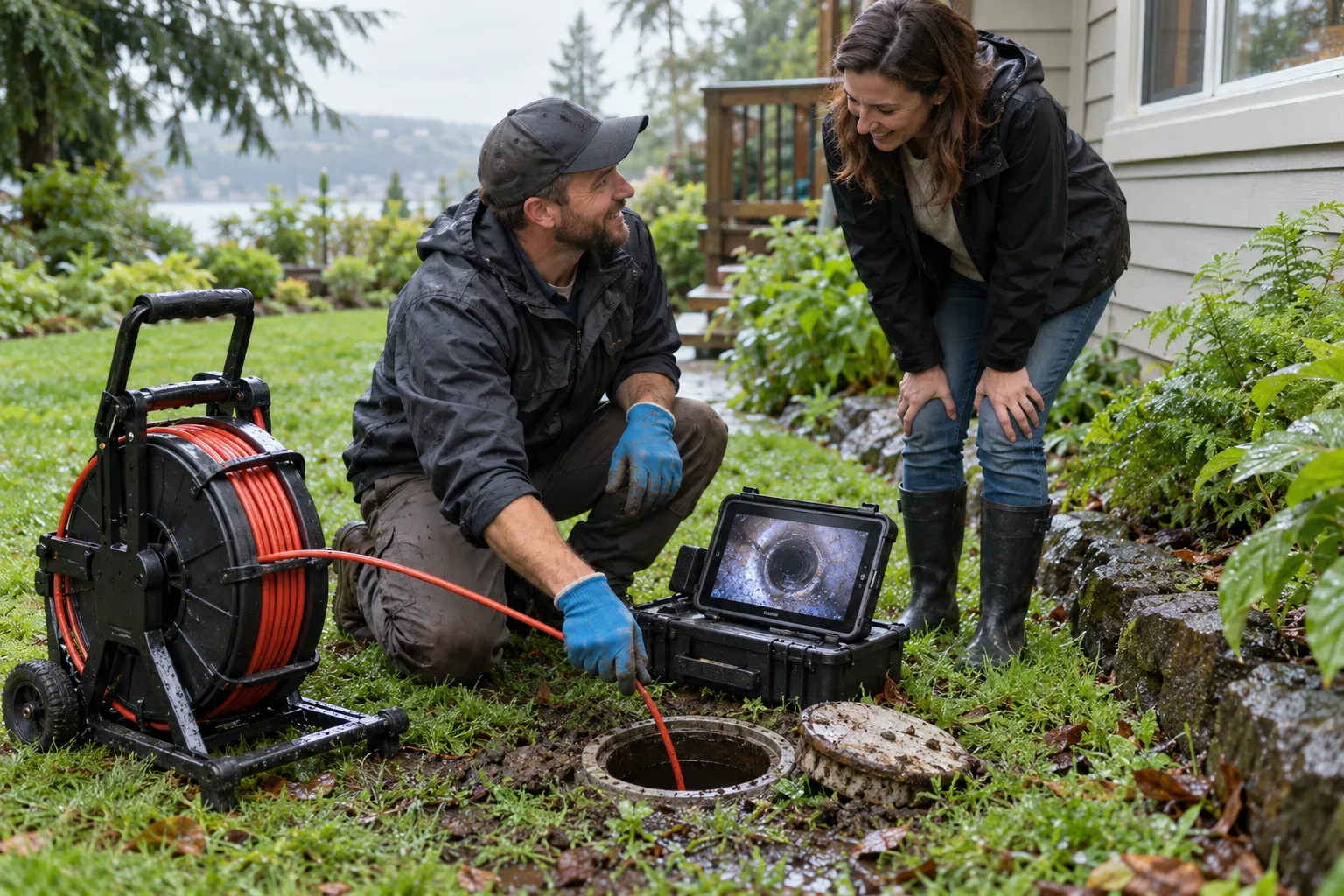
Is your main sewer line the problem? It is the big pipe that carries all your household waste out to the street or septic system. When it cracks, clogs or sags, every drain in the house can feel it.
Spreadeducational Plumbing is a referral service. We do not do the work ourselves. We connect homeowners in the Everett area with independent local providers who inspect, repair and replace sewer lines. Many providers can respond quickly, and hours vary, so it helps to check availability.
In our wet climate, steady rain, soft soil and busy tree roots put extra stress on buried pipes. Older craftsman homes and newer townhomes both face sewer issues. A provider can find the cause, explain your options and give you a written quote before work starts.
If sewage is backing up into a tub, shower or floor drain, treat it as urgent. You do not need to panic. You do need to act with care.
Start with safety. Stop using water in the house. That means no flushing, no laundry and no dishwasher. Every drop you send down has nowhere to go.
Keep kids and pets out of the wet area. Sewage can carry germs, so avoid touching it with bare hands. Open a window if the smell is strong. If you smell gas or see a power outlet in the wet area, step back and call your utility or emergency services.
Then reach out for help with the pipe itself.
Most sewer problems whisper before they shout. Here are the signs to watch for:
One slow sink is often a simple clog. Two or three problem drains point toward the main line.
Buried pipes live a hard life. Knowing the cause helps you pick the right fix.
Roots search for water. A tiny joint gap is enough of an invitation. Once inside, they grow into thick mats that catch waste.
Older wood-frame and craftsman homes may have clay, cast iron or fiber pipe. These can crack, flake or shift after many decades.
A long rainy season soaks the soil. Soft ground can let pipes sag and form low spots where waste collects. A windstorm can topple a tree and drag roots through a line.
Good question. Blocked pipe services clear a clog. A repair fixes damage in the pipe itself. Sometimes a provider clears the line first, then looks inside with a camera to see why it clogged. If the clog keeps returning, the pipe likely needs more than clearing.
The most common tool is a small waterproof camera on a flexible cable. The provider feeds it into the line through a cleanout. You can often see the video on a screen.
The camera shows cracks, roots, bellies (low spots), offsets and collapses. A locator can then mark the exact spot and depth on your property. That way, the digging plan is small and clear.
Not every sewer problem means a torn-up yard. Providers in our network may offer several approaches, depending on the pipe and the damage.
If only one section is damaged, a provider may dig a small hole and replace just that piece.
Lining places a resin-coated sleeve inside the old pipe. It forms a new pipe within the old one. It can mean far less digging, but it is not right for every line.
If the line is collapsed or badly worn, replacement may be the sound choice. Some methods pull a new pipe through the old path. Others use an open trench.
Many homeowners are surprised here. The pipe from your house to the property line is usually yours. The part past the line, in the street, often belongs to the city or utility.
Sewer work often needs a permit and an inspection. A provider can usually explain the local steps. Ask who pulls the permit and whether the quote includes it.
If sewage is backing up, do not wait. For slow signs, timing matters too. Dry spells make digging easier and keep trenches from filling with water. During the rainy months, providers may be busy, and wet soil can slow open trenches.
If you spot early warning signs, a camera check before the heavy rains can help. Think of it as getting ready before the rain.
Busy household? You can plan around your day. Ask the provider how long the water will be off, and when you can use toilets and showers. Ask about a time window that fits school runs and work calls.
A few easy prep steps help:
Good questions keep surprises away. Try these:
The provider, not Spreadeducational Plumbing, sets the terms, so ask for them in writing.
Some policies may cover sudden damage from a sewage backup, but many exclude wear and tear or root damage. Check your policy and ask your insurer. Providers can often help document damage for a claim, so take photos before anything is cleaned up.
You have the facts. Now you can move ahead calmly. Request an estimate and an independent local provider can walk you through the options.
A provider runs a small camera through the line to see cracks, roots and low spots clearly.
When damage is limited to one section, a provider may replace only that piece of pipe.
Some lines can get a new inner sleeve, which may mean less digging in your yard.
Collapsed or badly worn lines may need a new pipe, by trench or trenchless methods.
Prices vary a lot by pipe length, depth, soil, access and local permit rules. These are typical U.S. ranges only. Always ask for a written quote before work begins.
| Item | Typical range | Notes |
|---|---|---|
| Camera inspection | $150 – $500 | Often worth it before any digging |
| Clearing a main line clog | $150 – $600 | Does not repair damaged pipe |
| Spot repair | $1,000 – $4,000 | Depends on depth and access |
| Pipe lining | $3,000 – $10,000 | Needs a pipe that is not collapsed |
| Full line replacement | $3,000 – $25,000 | Longer or deeper lines cost more |
| Permits and inspection | $100 – $1,000 | Rules and fees differ by area |
Request a callback to check provider availability, or send the request form with a few details about the problem.
Spreadeducational Plumbing connects you with an independent provider in your area.
The provider inspects the line and explains the cause and your options.
Agree on a written quote, then plan the work around your household.
Providers explain what they found so you can choose your next step with confidence.
Independent providers in your area know local soil, weather, permits and common pipe problems.
Ask about timing windows that fit your family's routine, school runs and work schedule.
Get a written estimate first, so you know what the job includes.
Have a leak, a slow drain or a sewer smell? Request a callback to check provider availability, or send a request and share what you see.
No obligationLook for several slow or gurgling drains, sewage smells, backups in low drains, or soggy spots in the yard. A camera inspection by a local provider can confirm whether the main line is damaged.
Sometimes. Pipe lining and pipe bursting can reduce digging, depending on the pipe's condition. A camera inspection helps a provider tell you which options fit your line, and which do not.
Coverage varies. Some policies may cover sudden damage, but many exclude wear, age or roots. Check your policy and ask your insurer before work begins.
Have a leak, a slow drain or a sewer smell? Request a callback to check provider availability, or send a request and share what you see.
No obligation